
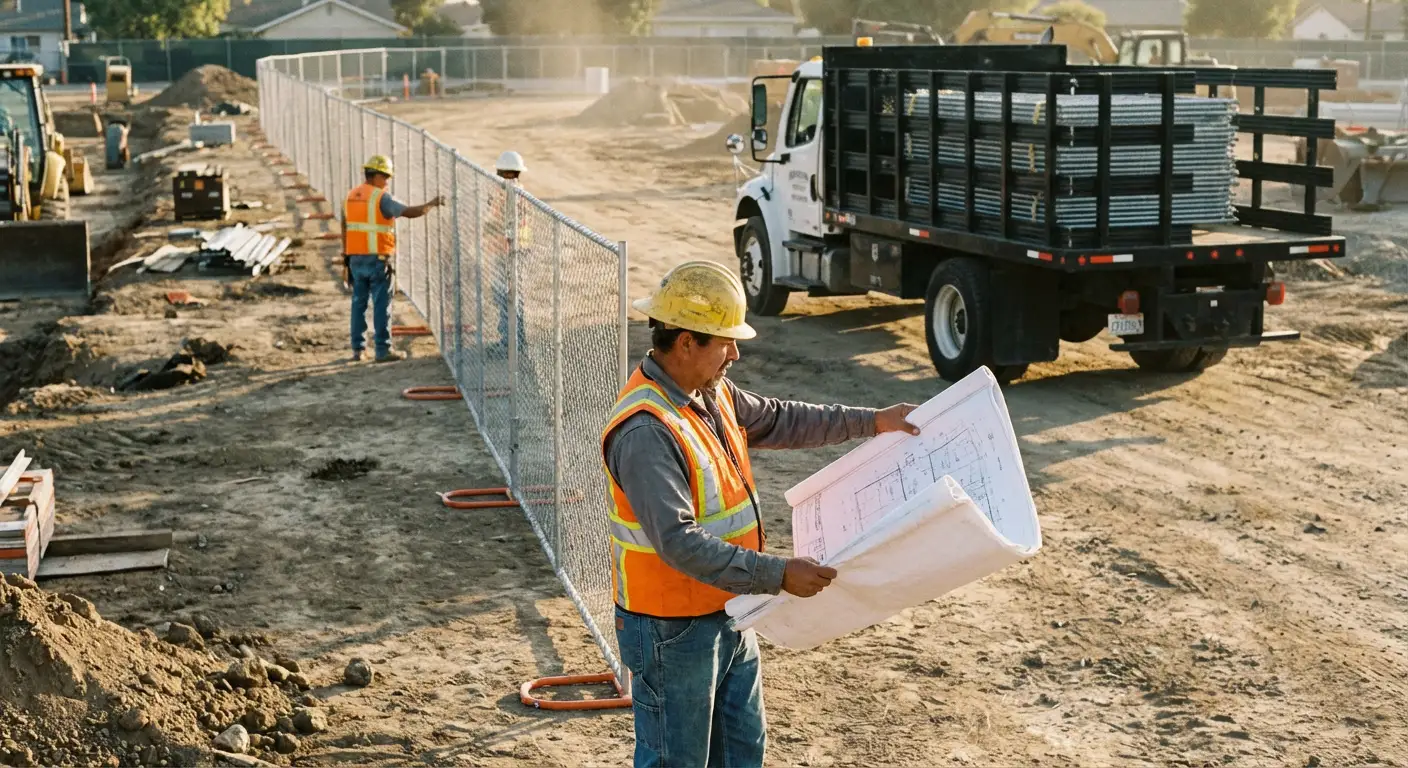
Post-Driven Temporary Fencing That Stays Put on the Job
We get it fast, and we keep it up. That’s how we handle post-driven temporary fencing here in Gilroy, especially after seeing what a hard storm can do to an open site. On jobs near Downtown Gilroy, Old Gilroy, and Miller Avenue, we drive the posts deep enough to hold when the wind picks up and the soil softens. That matters in a place with hot stretches, a few hard freezes, and not much rain until the ground takes it all at once. We also set the run with clean corners, solid gate placement, and the right spacing for the site layout.
- We start by reading the grade and choosing the post line before any steel goes in.
- We use hardware and bracing that match the job, not whatever happens to be on the truck.
- We check the finish so the fence stays secure, workable, and easy for crews to live with.
Installation Requirements
-
We set the posts where the soil and grade give us real bite, not just surface hold, because Gilroy wind and sudden runoff will work on a fence all day.
-
Our crew ties the line out with panel spacing, corner bracing, and gate locations first, then we drive the posts so the run stays straight through the whole site.
-
After that storm history around old downtown Gilroy, we pay close attention to flood-prone low spots, muddy access, and anything that could loosen an unsecured temporary fence.
-
We keep the setup practical for jobs near Downtown Gilroy, Old Gilroy, and Miller Avenue.
-
For busy commercial corridors like Downtown Gilroy and Old Gilroy, we check tie points, gate swings, and sightlines so the fence works for crews and traffic alike.
-
We often pair post-driven installs with concrete steel bases, wind load resistance, and zero trip hazard details when the ground or layout calls for it.
| Job factor | What we watch |
|---|---|
| Wind and weather | We drive posts to hold against hot, dry gusts and storm runoff. |
| Site layout | We line out corners, gates, and access lanes before installation. |
| Ground conditions | We adjust for softer soil, old fill, and low spots that collect water. |
| Local fit | We set fences for active sites around Downtown Gilroy, Old Gilroy, and Miller Avenue. |