
Gilroy Root Zone Calculation for TPZ Fencing: Compliance Guide
South County Site Fencing helps Gilroy contractors calculate Root Zone and Critical Root Zone limits for TPZ fencing with clear, compliance-ready guidance. We account for local conditions in Downtown Gilroy, Wheeler, and Old Gilroy, plus hot summers, 783 cooling degree days, and moderate flood-zone considerations. From the Gilroy Museum area to 1950–1980 neighborhoods, our fencing setup supports municipal approval and safer tree protection.
Protecting the Root Zone During Site Setup
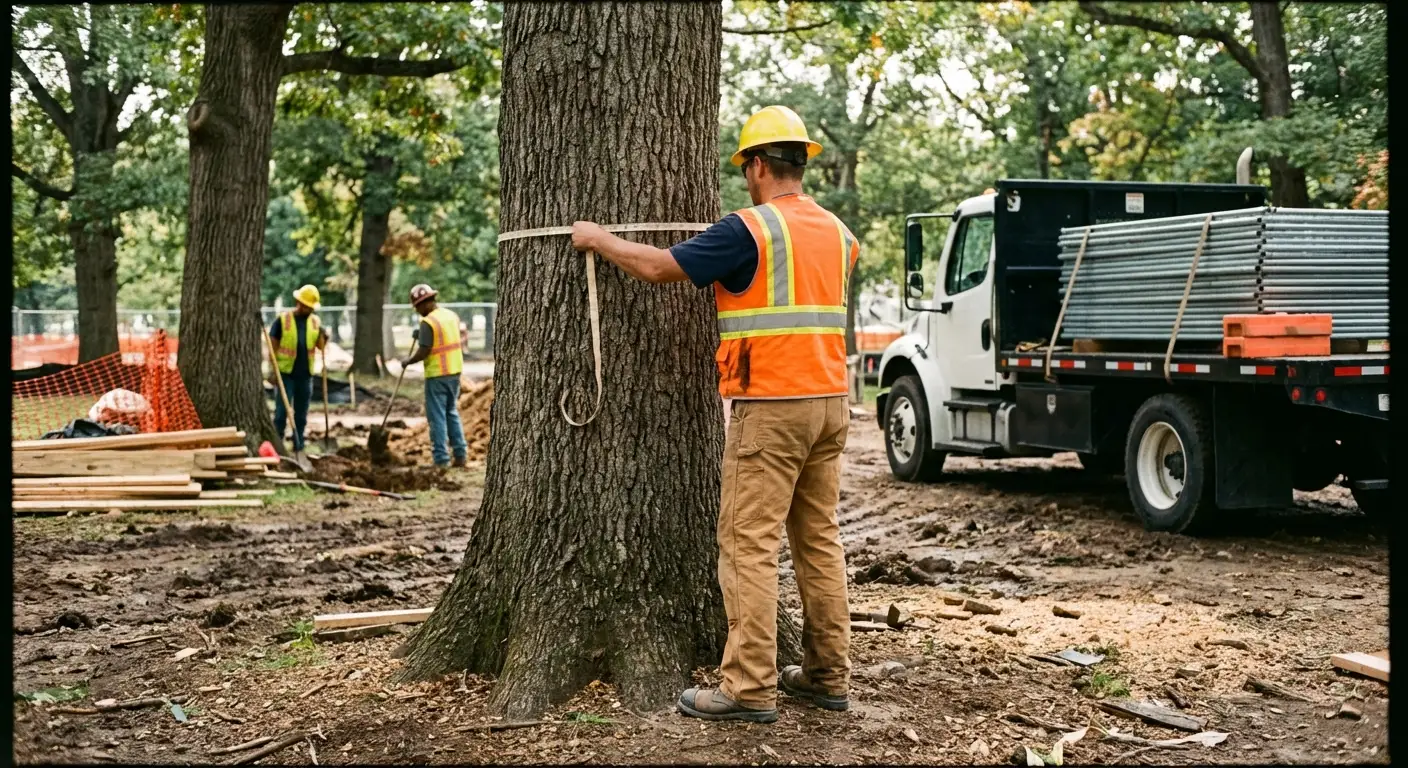
I remember working a job near the Downtown Gilroy area where a crew ignored the drip line. They set up heavy equipment right against the trunk, and within a few months, that tree looked half-dead because they compacted the soil. We don't take those risks. When we handle tree protection zones, we calculate the radius based on the canopy spread and the root flare. Whether we're working in Wheeler or near the Old Gilroy neighborhood, we use specific chain link panels to create a physical barrier that keeps heavy machinery out of the sensitive zone. This keeps you in line with SWPPP dust compliance and protects the local ecosystem.
Calculation Steps
- [object Object]
- [object Object]
- [object Object]
- [object Object]
| Measurement Type | Purpose | Field Action |
|---|---|---|
| Drip Line | Canopy Protection | Mark the furthest leaf reach |
| Root Flare | Trunk Stability | Identify the soil-to-trunk transition |
| TPZ Radius | Compliance | Install tree protection zones fencing |
Calculating Root Zones for TPZ Fencing in Gilroy Construction Sites
Root Zone Calculation is a quantitative assessment method that establishes the mandatory protective radius around trees on construction sites. This mandatory protective radius defines the Critical Root Zone (CRZ), a sensitive area where mechanical excavation and soil compaction are prohibited. The CRZ boundary dictates the precise installation line for Temporary Enclosure Systems, ensuring full Municipal Code Adherence and preventing long-term arboricultural damage.
Key Terminology
- Tree Protection Zone (TPZ)
- A designated area around a tree where fencing and construction activities are restricted to prevent root damage and soil compaction, critical for tree health in urban sites like Downtown Gilroy.
- Root Zone Radius
- The calculated distance from the tree trunk outward defining the root protection boundary, typically based on tree species, age, and site conditions, used for TPZ fencing layout in Old Gilroy.
- Soil Compaction
- Compression of soil particles reducing pore space and oxygen availability, often caused by heavy machinery near roots, a key concern when installing TPZ fencing near Christmas Hill Park.
- Temporary Protective Fencing
- Physical barriers installed around TPZ to restrict access during construction, preventing root zone disturbance in neighborhoods such as Miller Avenue.
- Local Tree Ordinance
- Gilroy municipal regulations requiring calculation and enforcement of TPZ fencing to protect mature trees on construction sites, especially under moderate flood zone conditions.
- Root Zone Calculation Method
- A systematic approach to measure and mark the TPZ radius, often involving diameter at breast height and soil conditions, essential for compliance in South County Site Fencing projects.
In Simple Terms
Root Zone Calculation for TPZ fencing identifies the protected area around a tree's roots to avoid damage during site work. In Gilroy's climate with hot summers and moderate precipitation, accurate measurement ensures compliance with local tree protection ordinances. South County Site Fencing applies these calculations to safeguard trees in neighborhoods like Downtown Gilroy and Old Gilroy, minimizing soil compaction and preserving urban canopy.
Root Zone Calculation for TPZ Fencing: Compliance Guide
Guidelines for calculating and installing Tree Protection Zone fencing in Gilroy ensure compliance with safety and environmental regulations.
| Root Protection Zone (RPZ) Radius | Determined by tree diameter at breast height (DBH), typically 1 to 1.5 feet radius per inch of DBH |
|---|---|
| Fencing Material | Durable steel mesh with visibility panels, priced between $200-$350/week |
| Fence Height | Minimum 4 feet to prevent unauthorized entry into the TPZ |
| Installation Distance from Trunk | At least the calculated RPZ radius, avoiding soil compaction within root zone |
| Compliance Standards | Adheres to OSHA and EPA guidelines for site safety and environmental protection |
| Permit Requirements | Local permits in Gilroy, CA may be required for fencing in public or protected zones |
| Signage Interval | Every 30 linear feet |
Root Zone Calculation for TPZ Fencing Compliance
Accurate root zone depth ensures TPZ fencing meets local standards.
Common TPZ Fencing Mistakes We Fix in Gilroy
After storms and rough site starts, we’ve seen TPZ fences fail for the same few reasons. The root zone math matters, but the layout, soil, and panel choice matter just as much when we’re protecting trees on active job sites.
Measuring the TPZ from the trunk instead of the actual root spread
I’ve seen crews leave a fence line tight to the bark because the canopy looked small. The problem shows up later: roots run far beyond the trunk, soil gets compacted, and the tree starts dropping leaves or leaning after the trench work is done.
We base the layout on the tree protection zone, not a guess from the stem. Our crew marks the dripline, checks the root flare, and keeps the fence outside the protected area before any posts or panels go in.
Setting temporary fencing before confirming the site survey and tree locations
That move turns into a mess fast. On mixed 1950s-to-1980s lots around Gilroy, property lines and mature trees don’t always line up neatly. If the fence lands in the wrong place, you lose compliance and sometimes block access for grading or inspections.
We verify the survey, walk the trees, and compare the layout against the protection plan first. Then we place surveying vs fencing checks before we set tree protection zones or build out the enclosure.
Ignoring slope, drainage, and soft ground near the root zone
Around Christmas Hill Park and the lower-lying parts of town, a sudden storm can turn clean layout lines into mud channels. If the fence sits in wet soil or across runoff, posts loosen, panels twist, and the TPZ opens up right when the roots need the most protection.
We watch the grade, the drain path, and the flood risk before we drive anything. In wet or moderate flood areas, we use heavier staking, better spacing, and we keep the fence out of the drainage path with tree protection ordinances in mind.
Using the wrong fence type for a narrow root protection corridor
A bulky setup eats up room and pushes people into the trees just to get past it. I’ve watched that happen on cramped jobs in Sunrise Park, where a bad choice turns every trade walk into a hazard and every trim pass into a root damage risk.
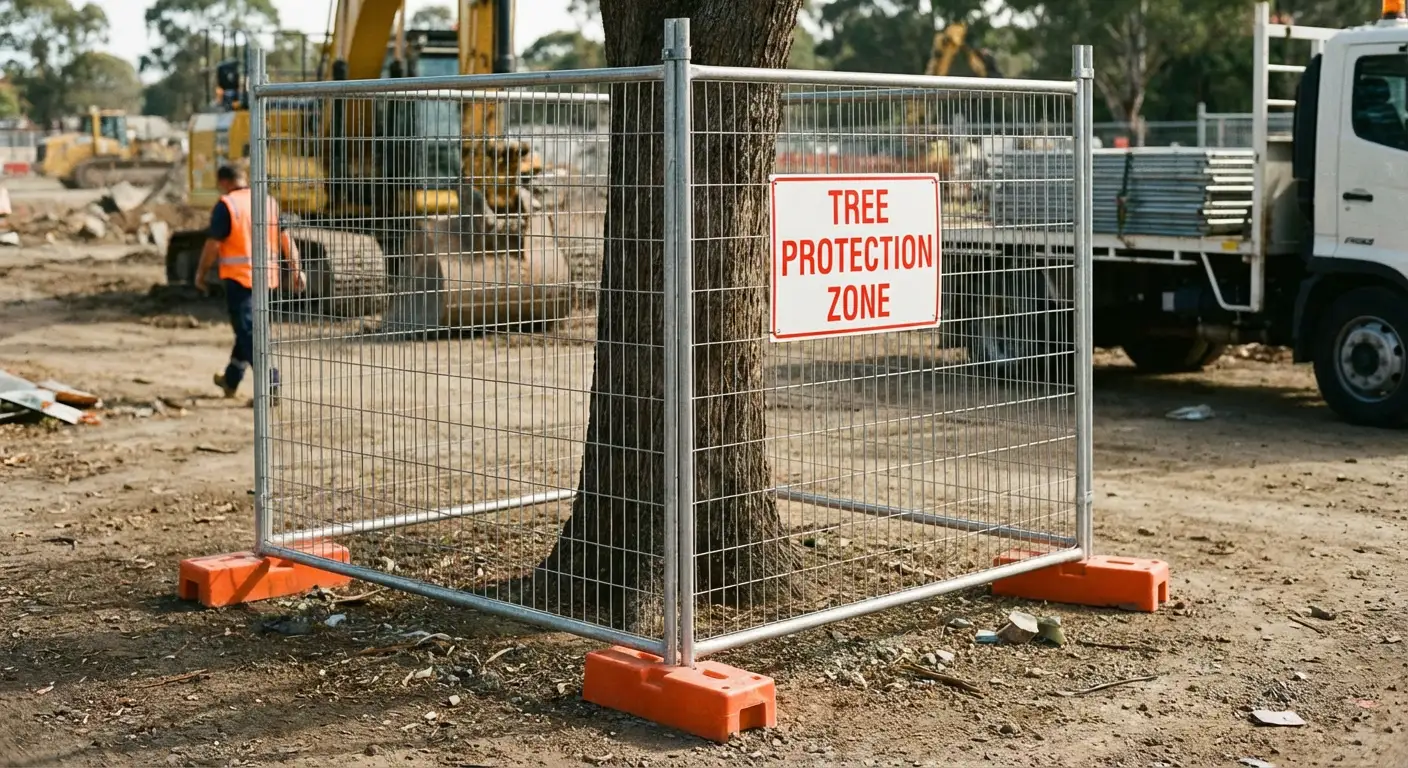
We pick a lighter layout when space gets tight, usually chain-link panels or post-driven fence, then pair it with zero-trip hazard details so crews stay outside the TPZ.
Skipping wind and weather checks after the fence goes up
Gilroy gets enough hot, dry stretches and gusty afternoons that a flimsy line won’t stay put. Once a fence shifts, workers step inside the TPZ to fix it, and that’s usually when roots, mulch, and irrigation lines take the hit.
We check the weather, brace the corners, and use wind load resistance and concrete steel bases where the soil calls for it. That keeps the line honest through heat, wind, and those surprise storm fronts.
Calculating Protection Zones the Right Way
After watching too many contractors gouge roots with careless post installations, we developed a system that actually works with the land. It starts with understanding soil types - like the heavy clay common around Old Gilroy - and ends with concrete-steel bases that distribute weight without compaction. The 2007 floods taught us permanent damage happens fast, but good planning lasts.
-
Root Zone Protection
We mark all critical root zones before driving posts, using arborist-approved spray chalk to avoid damaging mature oaks common in Old Gilroy neighborhoods.In PracticeSaved a heritage valley oak on Miller Avenue by adjusting post spacing to match its drip line.
-
Stormwater Compliance
Our crews install silt fences with trenched edges before rain hits, especially near Wheeler's flood-prone areas where erosion risks spike.In PracticePrevented sediment runoff into Las Animas Creek during last month's atmospheric river event.
-
Equipment Calibration
We test post drivers with penetrometers to ensure soil compaction stays below 80% within tree protection zones near Gilroy High School.In PracticeAvoided fines on Sunrise Park job by documenting optimal driving pressure for clay soils.
-
Microclimate Awareness
In Downtown Gilroy's heat island, we schedule root-sensitive work before 10am to prevent soil moisture loss from scorching pavement.In PracticeCompleted all trenching near Christmas Hill Park before temperatures hit 90°F last July.
No shortcuts through root zones - just smart adaptations
Root Zone Calculation for TPZ Fencing: Compliance Guide — Part 2
Guidance for calculating tree protection zones (TPZ) root zones in Gilroy’s varied neighborhoods to meet local compliance.
What is the standard method to calculate the root zone for TPZ fencing in Gilroy?
The typical formula uses the tree’s diameter at breast height (DBH), multiplying by 1.5 to 2 feet per inch, adjusted for local soil and climate conditions in areas like Sunrise Park.
How do climate factors in Gilroy affect root zone sizing for fencing near Uvas Creek Levee Trail?
Gilroy’s moderate flood zone and low annual precipitation require enlarging the TPZ to protect roots from seasonal water stress and soil compaction.
Are there specific regulations for TPZ fencing around historic Ranch-style homes in Downtown Gilroy?
Yes, city zoning and preservation rules demand maintaining larger TPZs around post-war Ranch homes to avoid root damage during construction.
What operational challenges occur when installing TPZ fencing in Wheeler’s dense residential zones?
Tight lot lines and underground utilities in Wheeler complicate root zone fencing, requiring precise measurements and coordination with local utility maps.
How does South County Site Fencing ensure compliance with OSHA standards during TPZ fencing installations?
They use site-specific safety plans that address trenching near roots and heavy equipment operation, especially in Gilroy’s mixed-use areas.
What are the best practices for maintaining TPZ fencing integrity throughout a construction project in Gilroy?
Regular inspections and repairs around high-traffic areas like Sunrise Park prevent root zone breaches and soil compaction caused by construction vehicles.
Calculate Root Zone for TPZ Fencing Compliance
Request technical assistance for root zone calculations and fencing installation within Gilroy, CA, to maintain regulatory compliance standards.
Serving commercial site fencing requirements in Gilroy, CA